
Key Takeaways
- Urban wood salvage is the process of converting trees removed from residential and municipal properties into usable lumber, mulch, or biochar instead of sending them to landfill or chipping them for waste.
- A single mature hardwood tree can yield 200 to 800 board feet of millable lumber, depending on species, trunk diameter, and defect distribution.
- The pathway from felling to finished product typically follows five stages: salvage, bucking, milling, air drying, and kiln drying.
- Urban wood differs from reclaimed wood because it comes directly from living trees in the city. It is local, traceable, and free from the lead paint, nails, and chemical residues common in reclaimed barn or industrial timber.
- Choosing a tree service that mills on-site preserves the carbon stored in the wood and supports Toronto’s local woodworking economy, as outlined by LEAF’s Urban Wood Utilization Initiative.
When a mature tree comes down in a Toronto backyard, most homeowners may assume the same fate for the trunk: it is chipped, hauled away, and eventually composted or burned. However, a large maple, oak, or black walnut taken down on a residential lot often contains lumber of furniture-grade quality.
Here, we’ll explain what actually happens to a tree after a professional tree removal in Toronto, why the disposal method matters environmentally and economically, and what to ask your arborist before the saw touches the trunk.
Saying Goodbye to a Yard Tree
The decision to remove a tree is rarely casual. Many of the trees Toronto homeowners take down are older than the houses they shade. Silver maples planted in the 1950s, Norway maples from the post-war building boom, black walnuts that pre-date the suburb itself. Disease, storm damage, structural failure, or development pressure forces the decision.
What homeowners might not realize is that the disposal choice they make in the next 48 hours determines whether decades of stored carbon get released or preserved, and whether the tree disappears entirely or persists as a table, a bench, or a mantle in their own home.
Urban Wood Salvage Process: From Tree to Lumber
Loyal Tree’s in-house workflow follows the standard urban salvage progression. Each step has implications for the final product’s quality and value.
1. Salvage and Bucking
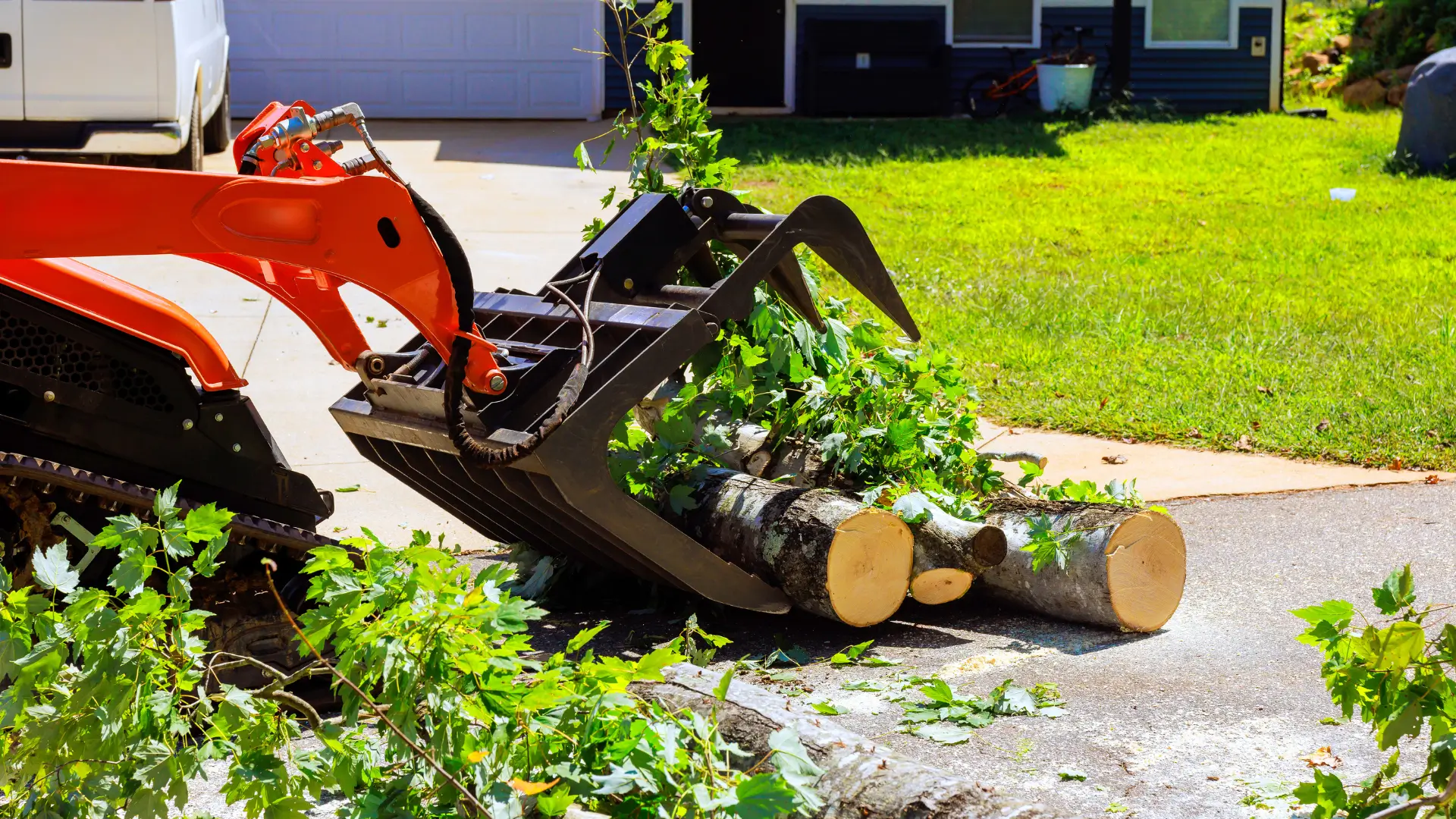
After the tree is felled, the trunk is sectioned (“bucked”) into logs sized for the milling equipment. Buckers preserve trunk length where possible. Longer logs yield longer boards, which can command higher value. Crotches, burls, and unusual grain features are kept intact rather than discarded, because they often produce the most striking figured lumber.
2. On-Site Milling
Mobile bandsaw mills allow the log to be processed in the driveway where the tree fell. This matters for two reasons: first, transporting full logs is expensive and often impractical on Toronto residential lots; second, on-site milling means the homeowner can specify cut patterns like quarter-sawn, live-edge slabs, or dimensional boards based on their intended use. Loyal Tree’s on-site milling service handles this stage directly, avoiding the typical handoff to a separate sawyer.
3. Stickering and Air Drying
Freshly milled boards are stacked with thin spacers (“stickers”) between each layer to allow airflow. Air drying typically takes 6 to 12 months per inch of board thickness, depending on species and ambient humidity. This stage cannot be rushed without inviting cupping, checking, or warping.
4. Kiln Drying
After air drying, lumber enters a kiln to bring moisture content down to 6–8%, the level required for indoor furniture use. Kiln drying also serves a sanitary function: it kills any insect larvae present in the wood, which is particularly important for ash logs salvaged during the emerald ash borer crisis.
5. Final Use
Finished lumber is sold to local woodworkers, used in custom furniture commissions, or returned to the original homeowner for personal projects. Lower-grade material like branches, knotty sections, or sapwood might be converted to mulch, firewood, or biochar.
Why It Matters: The Environmental Case
Carbon Storage
A living tree sequesters atmospheric carbon in its wood. When that wood is chipped and composted, or burned, the stored carbon returns to the atmosphere within months or years. When the same wood is milled and made into furniture or building material, the carbon remains locked away for decades, often a century or more. Milling shifts the disposal calculation from a near-term carbon release to long-term storage.
Landfill and Waste Diversion
Toronto generates a significant volume of green waste from tree removal operations every year. While much of this is chipped for mulch, a substantial portion of millable trunk wood still ends up in waste streams that produce methane during decomposition. This greenhouse gas roughly 25 times more potent than CO₂ over a 100-year period.
A Local Resource
LEAF (Local Enhancement and Appreciation of Forests) operates the Urban Wood Utilization Initiative in partnership with the City of Toronto, working to redirect this material into the local economy. The initiative’s most visible project, milling the historic “Maple Leaf Forever” silver maple that fell in Leslieville in 2013 into commemorative pieces now held at the Ontario Science Centre, demonstrates the cultural as well as ecological value of salvage over disposal.
Urban Wood vs. Reclaimed Wood
The terms are often confused. Reclaimed wood comes from dismantled structures such as old barns, factories, or industrial buildings. It is frequently contaminated with lead paint, embedded nails, creosote, or other industrial residues. It is also often shipped long distances, undermining its sustainability credentials.
Urban wood, by contrast, comes from living trees recently removed from a known, local site. It is traceable to the specific property where it grew. It contains no industrial contaminants. And it travels, in many cases, only the distance from one Toronto neighbourhood to another.
What to Ask Your Arborist Before Removal
Homeowners considering tree removal can preserve the salvage option by asking three questions before work begins:
- Can the trunk be salvaged for milling? Not every tree is millable — heavy decay, embedded metal, or excessive splitting may rule it out — but many are.
- Is on-site milling available? This is the single biggest determinant of whether salvage is economically viable.
- Can I retain the lumber for my own use? Many tree services that do mill will return a portion of the boards to the homeowner.
The fate of a removed tree is decided by the homeowner and the tree service company at the estimate stage. Choosing a contractor with in-house milling capability turns what would otherwise be waste into furniture, flooring, or commemorative objects, and keeps decades of stored carbon out of the atmosphere.
Loyal Tree provides timber salvage and on-site milling as part of its tree removal services across the GTA. Homeowners considering removal of a mature tree are encouraged to ask about salvage options during the initial consultation.
Frequently Asked Questions
What happens to my tree after it is removed?
In conventional tree removal, the trunk is chipped or hauled to a transfer station. In salvage-oriented removal, the trunk is bucked into logs, milled into boards, dried, and sold or returned to the homeowner. The disposal route is decided before the tree comes down, so the choice belongs to the homeowner at the estimate stage.
Is urban wood salvage more expensive than standard removal?
Pricing varies. Salvage and on-site milling involve more labour than chipping, but the value of the lumber produced often offsets the additional cost, particularly for hardwood species like black walnut, oak, or cherry. Some companies offer reduced removal pricing in exchange for retaining the wood.
Which tree species are worth milling?
Hardwoods are the priority: black walnut, white oak, hard maple, cherry, and ash all yield furniture-grade lumber. Softer species like silver maple and poplar are still usable but produce lower-value boards. Conifers are typically less suitable for furniture but viable for construction lumber.
How long does it take before salvaged wood is usable?
Air drying takes 6 to 12 months per inch of thickness. Kiln drying adds several days to a few weeks. A two-inch slab milled today is realistically usable as furniture stock in roughly 18 to 24 months.
Can I make furniture from my own tree?
Yes. Many homeowners retain the milled slabs and either build the furniture themselves or commission a local woodworker. The sentimental value of a table built from a tree your family planted is often the primary motivation for salvage.
Does Toronto require a permit for tree removal?
Most tree removals in Toronto require a permit under the city’s private tree by-law, particularly for trees with a trunk diameter of 30 cm or greater. A qualified arborist can assess permit requirements and submit the application on the homeowner’s behalf.
What is the difference between urban wood and reclaimed wood?
Urban wood is freshly milled from a recently removed living tree at a known local site. Reclaimed wood is salvaged from dismantled buildings and may contain paint, nails, or chemical residues. Urban wood is generally cleaner, more traceable, and lower in transport emissions.
Is on-site milling available everywhere in the GTA?
Mobile mill operations require enough driveway or yard space to set up the equipment safely. Most residential lots in Toronto, Etobicoke, Markham, Vaughan, and the surrounding GTA can accommodate it. Tight downtown lots may require off-site milling instead.