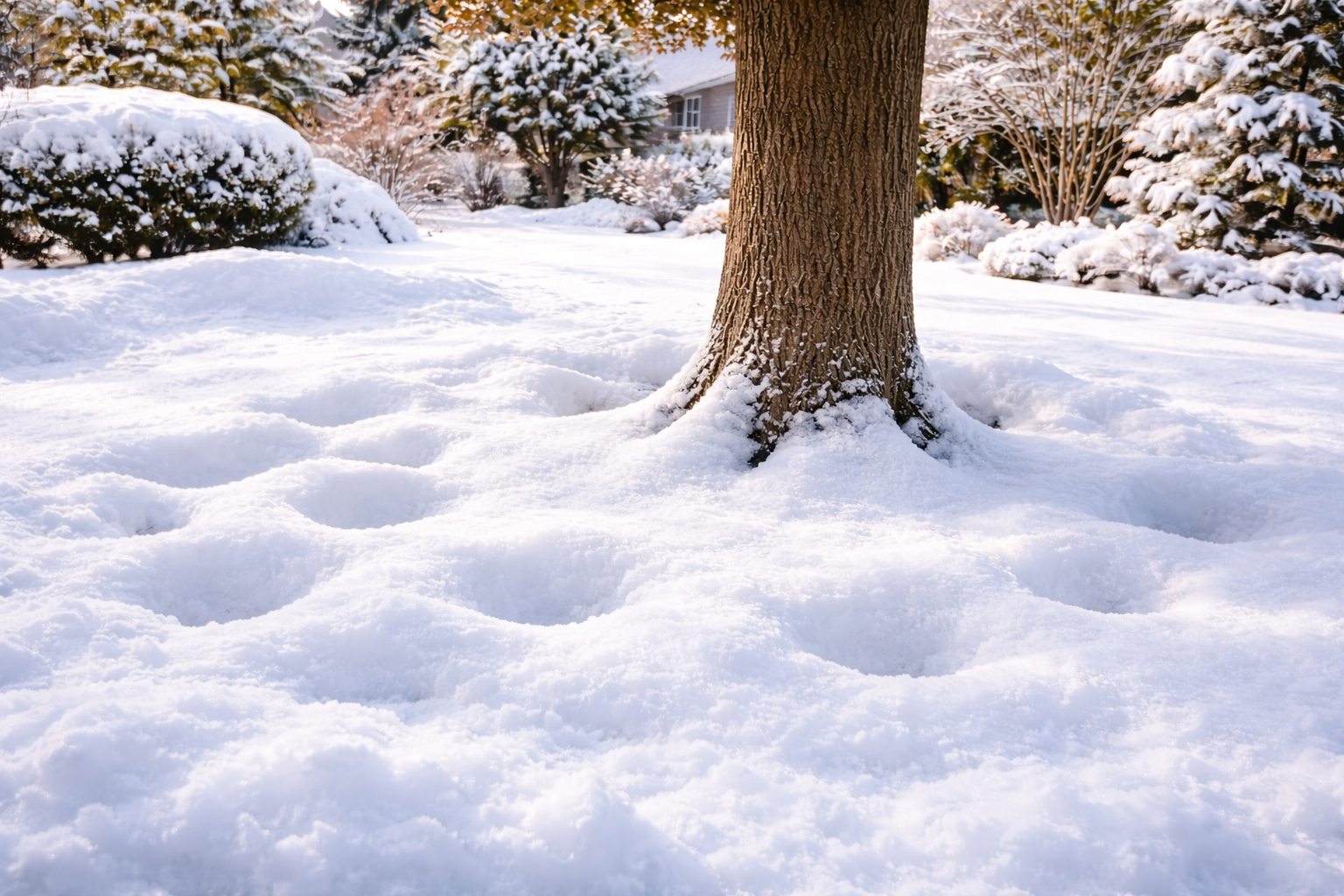

A good privacy screen does more than hide a view. It softens noise, blocks wind, frames outdoor rooms, and adds green structure that looks alive in every season. In Toronto and across the GTA, evergreens are the backbone of year-round privacy. The right mix of species and smart placement gives you dense coverage without constant pruning or winter damage. Here is a practical guide to planning and maintaining an evergreen screen that works in January and in July.
Start With a Purpose and a Line
Decide what you want to screen and from where. Is it a second-storey window across the fence, a side-yard walkway, or traffic on the street. Stand at the spots you use most and mark a simple line where a hedge or staggered planting should go. Note the sun pattern, prevailing wind, and any salt exposure from driveways or roads.
Pick the Right Evergreen for the Site
Toronto yards cover a wide range of conditions. Matching species to your site is the fastest way to long term success.
Full sun, average soil
Eastern white cedar (native arborvitae) grows well and takes formal shearing or a natural shape. Pyramidal spruce varieties give a deeper green and better wind break where space allows.
Part shade or narrow side yards
Columnar cedars and narrow hemlock cultivars fit tight spaces. Hemlock tolerates shade better than most but needs protection from wind and salt.
Windy corners and open lots
Norway spruce and Serbian spruce handle winter winds better than many cedars. They root deeply and keep dense side branches with light pruning.
Near salted roads or driveways
Salt exposure burns many cedars and yews. Where splash and drift are common, consider salt tolerant options such as juniper cultivars or a mixed screen that places salt sensitive plants farther from the pavement.
Deer pressure
Where browsing is a problem, spruce is usually safer than cedar. If deer are regular visitors, plan a temporary fence during establishment.
Use Mixed Screens for Better Coverage
A single species hedge looks uniform but can fail all at once if a pest or disease appears. A mixed screen blends two or three evergreen types for resilience and texture. For example, alternate Serbian spruce with white cedar every second plant, or frame a cedar hedge with columnar pines at key sightlines. Mixing heights helps with second-storey privacy and adds a natural look.
Get Spacing Right
Most privacy problems come from spacing that is either too tight or too loose.
-
Measure the mature width on a reliable plant tag or from a nursery you trust.
-
For a solid hedge, plant at two thirds of mature width. A cedar that finishes at 90 cm wide should be planted roughly 60 cm on centre.
-
For large trees like spruce, aim for 60 to 70 percent of mature width when space allows. You will get an overlapping wall without crowding that invites disease.
-
In very tight side yards, plant in a gentle zigzag instead of a straight line. This creates quick overlap and looks fuller with fewer plants.
Prepare the Soil Before You Plant
Evergreens need air in the root zone as much as they need water. Urban soils are often compacted.
-
Loosen a wide strip along the planting line, not just the hole.
-
Blend in compost across the whole strip to improve structure. Avoid filling holes with rich soil against poor subsoil. Roots can stall at the boundary.
-
Set the root flare at grade and pull soil and mulch away from the trunk.
-
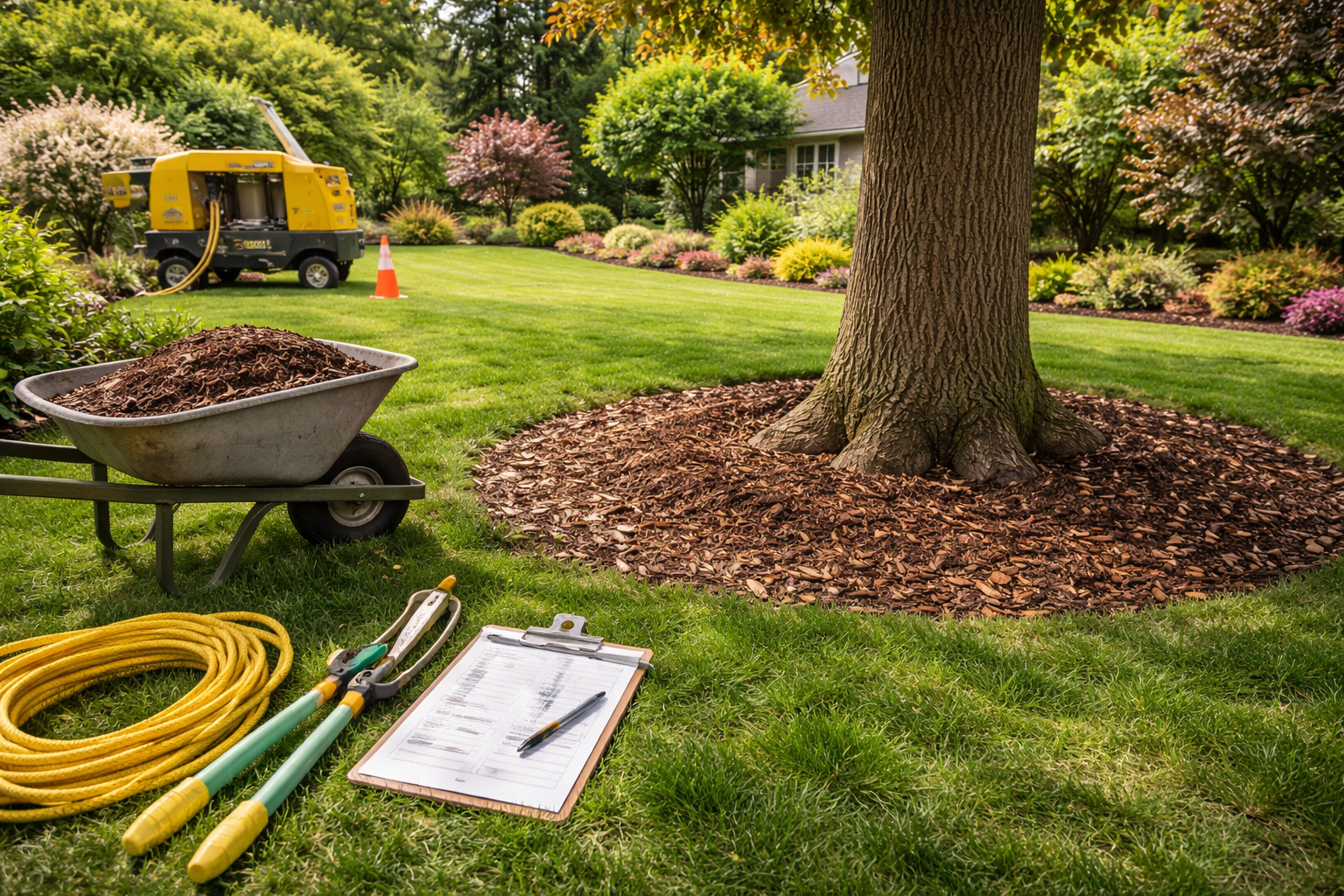
Mulch 5 to 8 centimetres deep across the root zone to keep moisture even.
Watering for Fast Establishment
A consistent watering plan is the most important step in the first two years. New evergreens suffer when they swing between very wet and very dry.
-
Water deeply once or twice a week in spring and summer, depending on rain.
-
Use a soaker hose along the line for 60 to 90 minutes per session.
-
Keep watering into late fall until the ground is close to freezing. This reduces winter burn.
-
Add a simple rain gauge and use the screwdriver test. You should be able to push it into the soil 15 to 20 centimetres after watering.
Pruning That Builds Density
Prune lightly and often rather than heavy all at once.
-
Cedars fill in from frequent light shearing. Keep cuts within the green outer layer. Do not cut into bare wood.
-
Spruces respond to selective tip pruning in late spring. Shorten new growth to encourage side branching.
-
Maintain a slight taper on hedges so the top is narrower than the base. This keeps sunlight on the lower branches and prevents thin spots.
If you need formal lines, set a schedule in late spring and again in late summer. Avoid hard pruning late in fall.
Privacy For Noise and Wind
If you want sound reduction and wind protection, mass matters. A double row with staggered spacing reduces gaps and breaks gusts more than a single line. Combine evergreens with a fence or pergola where space is limited. Solid structures reflect some sound while foliage absorbs and scatters it. Keep gaps near the ground closed with lower branches or shade tolerant shrubs.
Winter Protection That Pays Off
Evergreens lose moisture through foliage all winter. Protect them from dry wind and bright sun when needed.
-
Install burlap screens on the west and south sides in open locations.
-
In late fall, water deeply so the root zone enters winter hydrated.
-
Where salt spray is unavoidable, use temporary plastic snow fencing as a wind break and rinse plants in mild spells.
-
Consider anti-desiccant sprays for sensitive species, applied on a mild day and repeated as directed.
Plan for Year-Round Look
Evergreen screens look best when the ground line is tidy and the space has a finished feel.
-
Edge the bed and add a consistent mulch layer.
-
Mix in a few broadleaf evergreens or winter berries for contrast.
-
Use low accent lighting to graze the foliage at night, which also improves security.
Common Mistakes to Avoid
-
Planting too deep or piling mulch against trunks. Keep the trunk flare visible.
-
Daily light sprinkling instead of deep watering. Shallow roots dry out fastest.
-
Setting plants tight to a fence or wall. Leave space for growth and air flow.
-
One species across a long run. A single pest can take down the whole screen.
-
Ignoring city bylaws. Height limits and sightline rules may apply near streets and corners.
A Simple Timeline
-
Winter: plan the line, select species, and schedule site prep.
-
Early spring: prepare soil, run irrigation, and plant as soon as the ground can be worked.
-
First growing season: maintain deep watering, light pruning, and mulch.
-
Second season: begin shaping and fill gaps with staggered additions if needed.
Ready to design an evergreen privacy screen that works in every season
Loyal Tree’s ISA-certified arborists help you choose the right mix of cedars, spruces, hemlocks, and junipers, prepare soil, plant correctly, and set a care plan for fast density. We serve Toronto and the GTA with design, planting, pruning, and winter protection. Call 647-283-8556 or visit loyaltree.ca to schedule a site visit and build year-round privacy the right way.