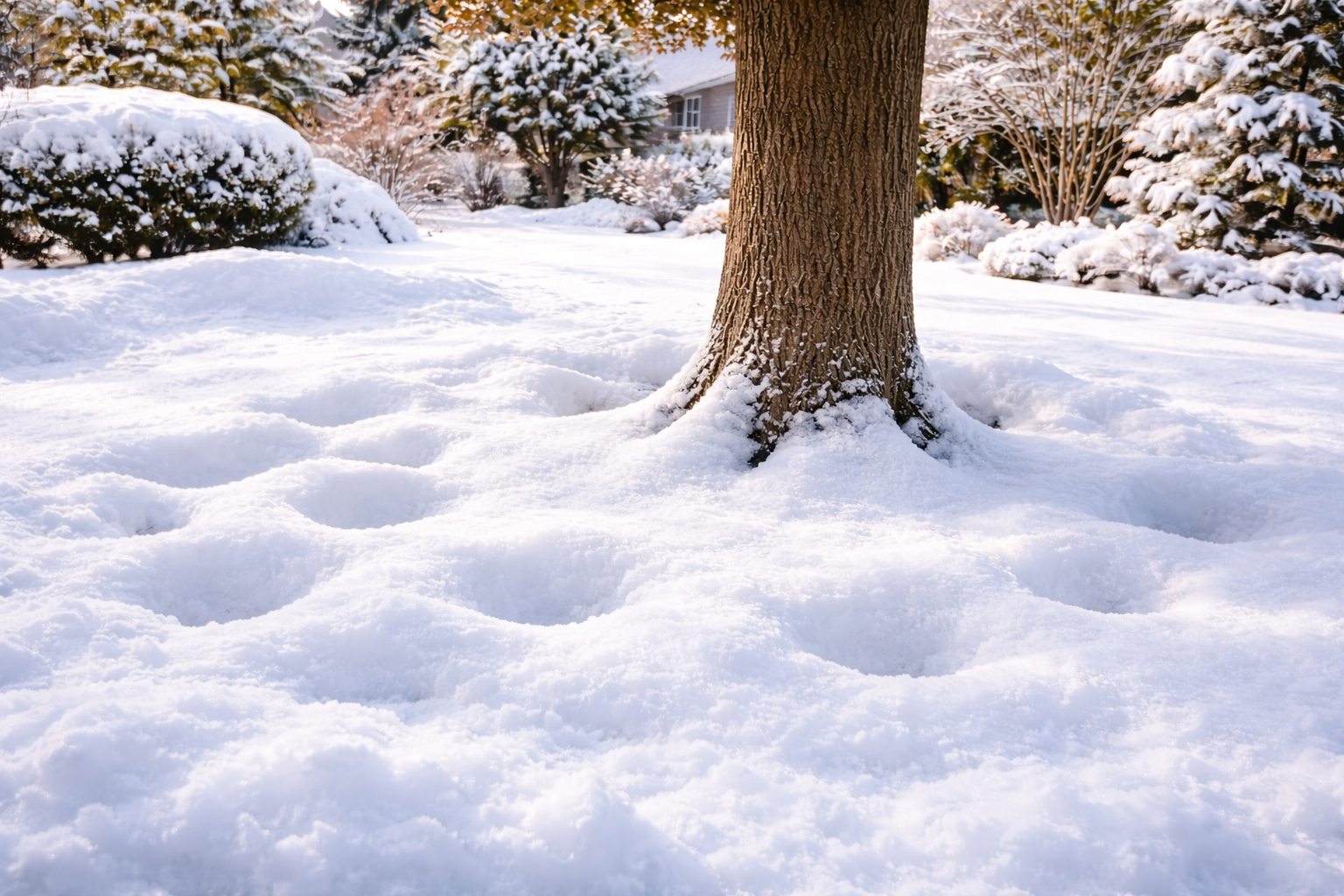

Basement leaks are one of the most frustrating winter problems in Toronto. You shovel snow, the temperature rises, snow turns to slush, and suddenly water shows up along the basement wall or near a floor drain. Many people assume the issue is only the foundation, but the truth is more layered. In winter, water takes the easiest path. Tree roots, compacted soil, and drainage patterns can influence where meltwater goes, how quickly it moves, and whether it reaches your foundation.
This guide explains how tree roots interact with winter drainage, what signs to watch for, and what steps you can take to reduce leaks without damaging your trees.
Why winter makes basement leaks more common
Toronto’s winter weather often cycles between freezing and thawing. This creates three conditions that raise the risk of leaks:
Frozen ground blocks infiltration
When soil is frozen, meltwater cannot soak in. Instead it runs across the surface and pools in low areas. If your yard slopes toward the house, water can collect along the foundation and find tiny entry points.
Snow piles create concentrated runoff
Shovelled snow stacked near the house melts in bursts. A single pile can release a surprising amount of water in a short period, overwhelming soil and drainage systems.
Freeze-thaw widens small cracks
Concrete and masonry expand and contract. Minor cracks that are harmless in summer can open slightly in winter. When water sits against the wall, it has more time to seep in.
Trees and roots do not cause all leaks, but they can contribute to how water flows and where it collects.
How tree roots influence drainage
Tree roots are not little drills that punch through concrete. That is a common myth. Roots grow where there is oxygen, moisture, and space. If a foundation crack or a gap around a pipe is already present, roots may exploit it, especially near older clay drain tiles or aging sewer laterals. More often, roots affect basements indirectly by changing soil structure and surface grading.
1) Roots can create channels for water movement
As roots thicken over time, they can displace soil and create pathways. When a root dies and decomposes, it leaves a void. During thaws, meltwater can follow these voids like tiny pipes, moving toward lower elevations. If your foundation is downhill from major root zones, this can increase water pressure near the wall.
2) Roots can heave or shift hardscape
Large roots near sidewalks, patios, or driveways may lift slabs. This can redirect meltwater toward the house instead of away from it. The problem is not the root itself, but the new slope created by the heave.
3) Root competition can reduce turf density
In summer, roots compete with grass for water and nutrients. Thin turf means less organic matter and poorer soil structure. In winter, this can translate to faster runoff and less absorption once the ground begins to thaw.
4) Roots can invade older drainage lines
If you have clay pipes or aging weeping tiles with joints, roots may enter through gaps. Once inside, they can trap debris and slow drainage. In winter thaw periods, a partially blocked system can back up, pushing water toward the basement.
Warning signs that roots may be part of the problem
Not every basement leak is tree-related. Still, these signs raise the odds that roots or tree location are contributing factors:
-
A mature tree is within a few metres of the foundation and the yard slopes toward the house
-
Water appears after a thaw even when rain is minimal
-
You see pooling along the foundation line where snow piles melt
-
A patio, walkway, or driveway slab has shifted and now slopes toward the home
-
A floor drain backs up during thaws
-
You have slow drains year-round, which can indicate root intrusion in the sewer lateral
-
You notice sinkholes or soft spots in the yard along the path to the street, suggesting a compromised underground line
If you suspect a blocked sewer line, a camera inspection is the fastest way to confirm root intrusion.
What you can do now without harming your trees
Move snow storage away from the house
The simplest fix is also the most overlooked. Do not pile snow against the foundation. Spread it across the yard where it can melt gradually. If space is limited, choose a spot that drains away from the house and away from planting beds.
Improve surface grading
The ground should slope away from the home for the first two metres. If soil has settled, add clean fill and topsoil in spring. In winter, you can create temporary channels in snow to redirect meltwater away from the wall.
Extend downspouts
Downspouts should discharge at least 2 metres from the foundation. In winter, make sure the outlet is not buried in snow. Ice at the discharge point can cause water to back up toward the house.
Keep eavestroughs clear
Clogged gutters can spill water down the wall and add to foundation saturation. Late fall cleaning reduces ice buildup and overflow.
Use mulch correctly
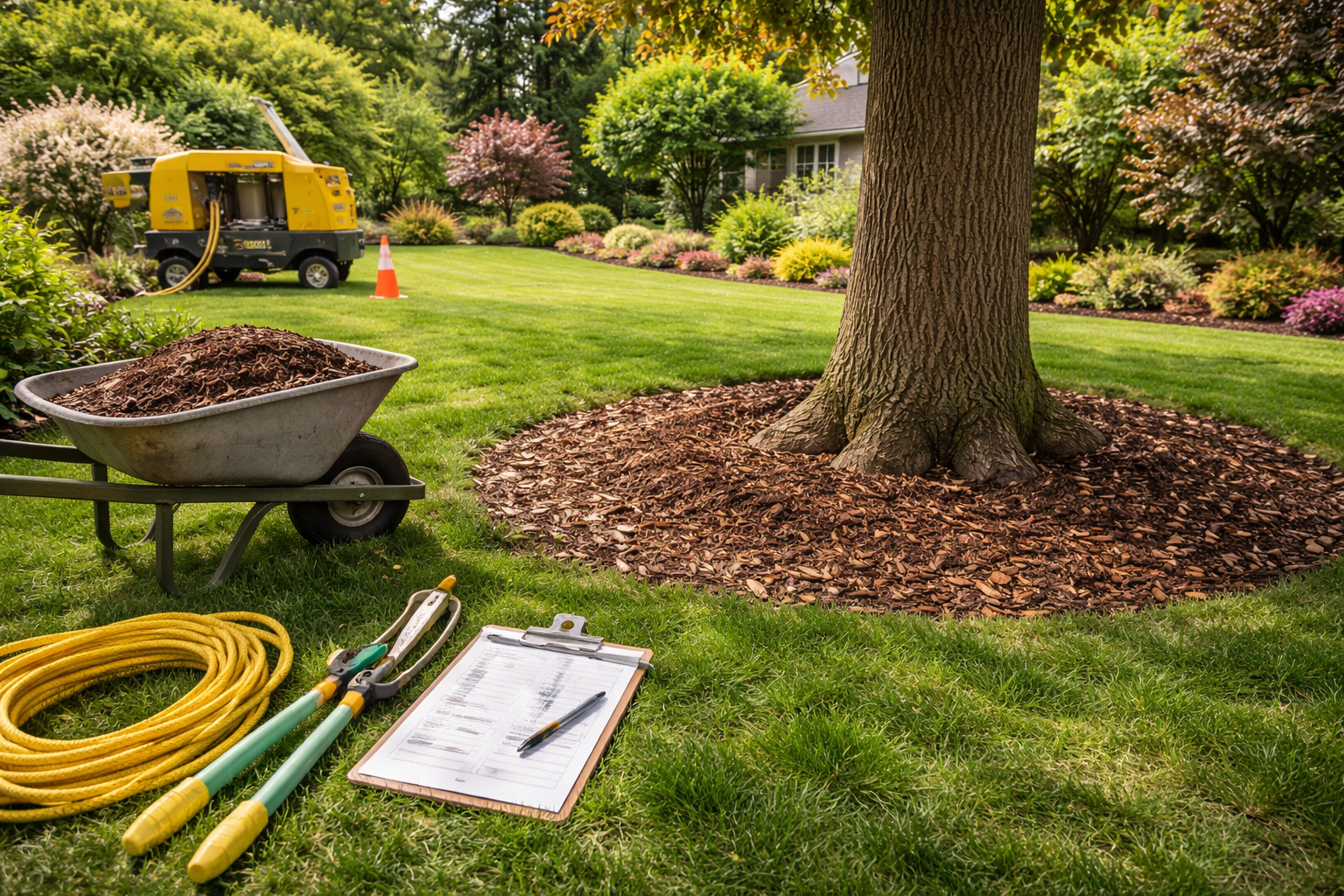
Mulch helps soil structure, but mulch piled high against the foundation can hold moisture. Keep mulch lower near walls and maintain a small gap. Around trees, mulch should be 5 to 8 centimetres deep and kept away from the trunk flare.
Avoid aggressive root cutting
Cutting large roots near a foundation can destabilize a tree and lead to failure in wind or snow load. It can also trigger stress sprouting and decline. Always consult an arborist before root pruning.
When professional help is needed
Some situations require a coordinated approach between an arborist, a plumber, and sometimes a foundation specialist.
Root intrusion in sewer or drainage lines
If a camera inspection confirms roots in the line, plumbing solutions may include mechanical cutting, hydro-jetting, or lining. An arborist can help reduce future intrusion by assessing nearby trees and recommending species-appropriate management.
Persistent pooling and poor infiltration
If water always collects in the same area, soil compaction is often the cause. Vertical mulching or pneumatic aeration can restore pore space and improve infiltration once temperatures rise.
Trees too close to the foundation
If a tree is causing repeated hardscape heave, major line intrusion, or conflicts with planned waterproofing, removal may be the most practical option. This decision should be made carefully with a full risk and value assessment.
Structural tree risk
If you plan any root work near a large tree, the tree should be inspected first. Root loss can increase the chance of failure, especially after a thaw when soil is soft.
A smart spring plan
Winter leaks often reveal what needs to be corrected once the ground thaws:
-
Regrade low spots and improve slope away from the home
-
Schedule a drain camera inspection if slow drainage persists
-
Consider soil aeration or vertical mulching in compacted areas
-
Adjust snow storage habits and downspout discharge points
-
Review tree placement and health with a certified arborist
The bottom line
Tree roots do not magically cause basement leaks, but they can influence water flow, hardscape slope, and drainage performance, especially in a winter freeze-thaw cycle. The best approach is to manage meltwater first, protect your grading, confirm any line intrusion with a camera inspection, and avoid risky DIY root cutting.
Concerned about a tree near your foundation or recurring winter pooling
Loyal Tree’s ISA-certified arborists can assess tree health, root zone conditions, and drainage patterns, then recommend practical steps that protect both your property and your trees. Call 647-283-8556 or visit loyaltree.ca to schedule an assessment and plan your spring fixes with confidence.