
Trunks Split in Cold Snaps, When to Paint Fruit Trees, and When to Call a Pro
Winter in Toronto brings big temperature swings. A sunny afternoon can warm bark, then a sudden night drop can snap it. Those loud pops you sometimes hear in deep cold are real. They are called frost cracks and they can weaken otherwise healthy trees. Here is how to understand the problem, protect trunks with wraps or paint where appropriate, and decide when a certified arborist should inspect the damage.
Why trunks split in winter
Bark and wood expand and contract at different rates. On bright winter days the south and southwest sides of trunks warm up. After sunset the air cools quickly and the bark contracts faster than the inner wood. That stress concentrates along the same line where the trunk is most exposed to sun and wind. If the stress exceeds the strength of the wood fibers, the trunk splits. This is a frost crack.
Two related issues often appear with the same conditions:
-
Sunscald. The cambium layer under thin bark heats during the day, exits dormancy, then is damaged by night cold. Later, bark peels and patches of dead tissue appear.
-
Repeat cracking. Once a frost crack forms, the same seam often reopens in later winters and turns into a cold snap. The internal check never fully disappears, so the site remains vulnerable.
Young or thin barked species are most at risk. These include maple, birch, beech, linden, mountain ash, and most fruit trees. Trees planted in open, windy spots or near reflective surfaces like light walls and snow piles are also vulnerable.
How to identify frost cracks and sunscald
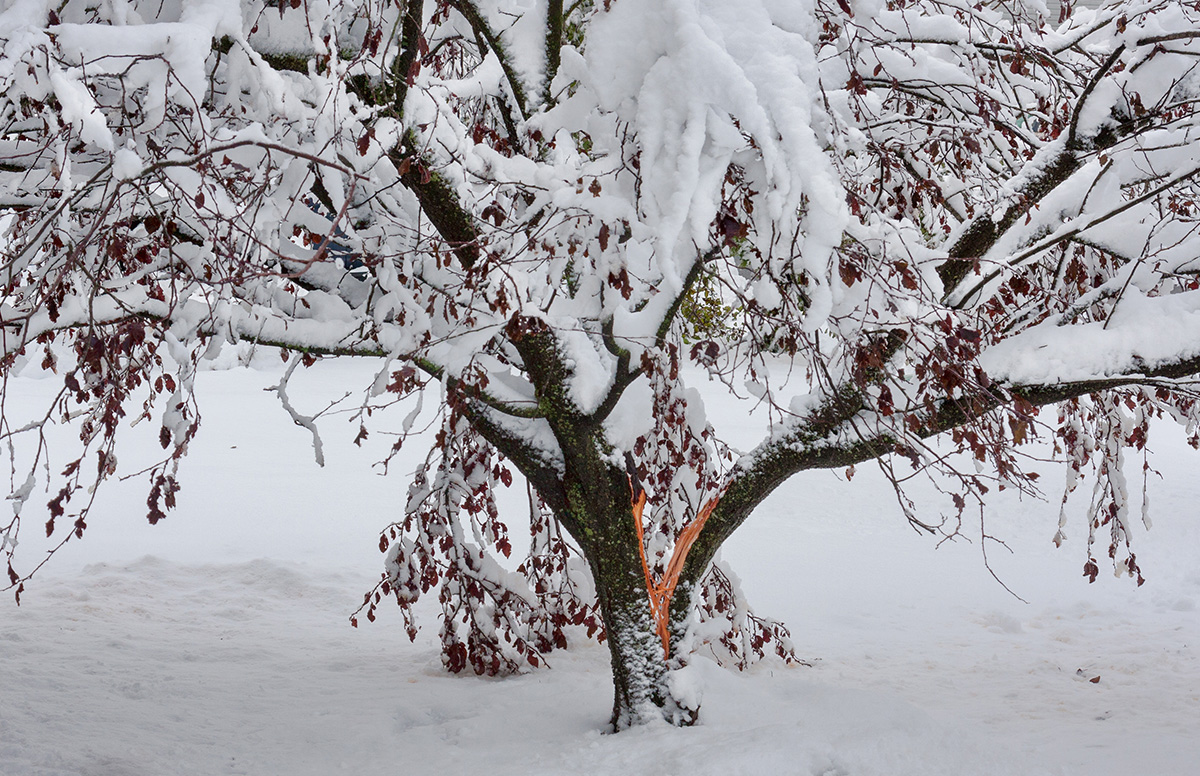
Look on the south or southwest face of the trunk. Frost cracks are long, straight splits that can run from near the base to well up the stem. You may see callus tissue trying to close the split from previous years. Sunscald shows as elongated, sunken, or discolored patches with loose or peeling bark. In spring, buds above a badly scalded area may leaf out late or not at all.
If the split is fresh, you may see clean wood and sharp edges. If older, the edges round over as the tree attempts to compartmentalize the wound. Note any oozing, fungal growth, or a sour smell. Those signs suggest decay and call for a professional visit.
Prevention with white wraps
Physical protection is the most reliable way to reduce winter trunk injury.
-
Tree wraps. Use commercial white paper or breathable synthetic wraps from early December to early April. Start at the base and spiral upward with a slight overlap to the first branch union. Secure the top and bottom without binding the bark. The white surface reflects sun and keeps temperatures more even.
-
Burlap screens. For small ornamentals, set two or three stakes on the south and west sides and staple burlap to make a low wind and sun screen. Leave space so air can move.
-
Mulch and water. A 5 to 8 centimetre layer of wood chips over the root zone moderates soil temperature. A final deep watering before the ground freezes helps the tree resist winter desiccation.
Remove wraps in early spring. Leaving them on too long traps moisture and can invite insects.
White paint on fruit trees: when and how
Painting trunks is common in orchards to limit sunscald and frost cracks on young fruit trees.
-
When it helps. Newly planted or young apples, pears, and stone fruits with thin bark benefit from a reflective coating. It reduces winter temperature swings on the sun side of the trunk.
-
What to use. Use interior grade white latex paint, never oil based paint. Mix one part paint with one part water to make a thin, breathable coating.
-
Application. Brush on an even coat from the base up to the first branches. Reapply as needed if rain or snow removes coverage.
-
What not to do. Do not paint over active, weeping wounds or fungal fruiting bodies. Paint is a reflector, not a sealant or disinfectant.
If you prefer not to paint, white wraps provide similar protection and are easy to remove in spring.
What to do if your trunk has already split
Stay calm. Many frost cracks look alarming but the tree can compartmentalize them.
-
Document the crack. Take clear photos in winter and again in spring.
-
Do not fill or seal. Avoid foam, cement, tar, or wound dressings. These trap moisture and can speed decay.
-
Clean edges only if ragged. If bark is torn and hanging, you can trim loose flaps to a smooth edge with a sharp, clean knife. Do not widen the wound.
-
Reduce stress. In late winter or early spring, plan light structural pruning to reduce leverage above the crack. Keep cuts conservative.
-
Support the root zone. Maintain a proper mulch ring and deep water during summer dry spells. Healthy roots help the tree close wounds.
When a crack needs a professional inspection
Call a certified arborist if you notice any of the following:
-
The crack opens and closes widely with temperature changes and you can see deep into the wood
-
The trunk has a noticeable lean, or the crack sits near the base where loads are highest
-
Fungal conks, oozing, or a hollow sound when tapping around the wound
-
The crack connects to a major branch union or co dominant stem with a tight V
-
The tree stands over a target such as a driveway, roof, or play area
-
Multiple stress signs appear together, such as late leaf out, sparse canopy, and early fall color
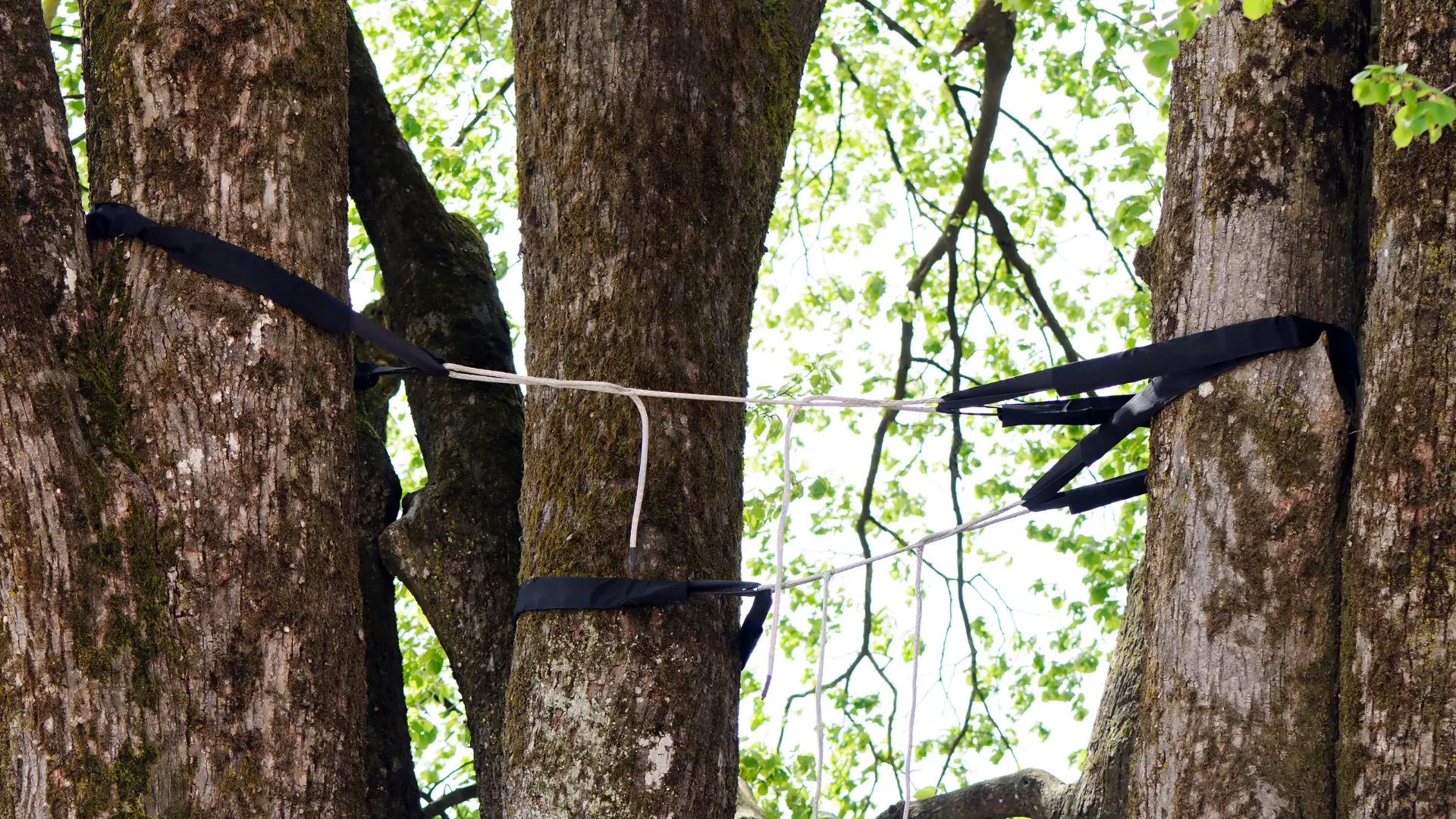
A professional can assess internal soundness with a mallet, resistograph, or other tools, and may recommend risk reduction through selective pruning. In some cases a cabling and bracing system can share loads between stems above a cracked union. If decay is advanced or the crack compromises the main stem on a large tree, removal may be the safest choice.
Reduce future risk
A few site adjustments can lower the chance of repeat damage.
-
Right tree, right place. For open, south facing locations, choose species with thicker bark once mature, or provide screens for thin barked trees until they age.
-
Avoid late summer nitrogen. Pushy late growth does not harden well and is more vulnerable in winter.
-
Shield from reflection. If a south wall reflects heat onto a trunk, consider a screen or a lighter color on the wall to reduce radiant load.
-
Keep the trunk flare visible. Do not pile mulch against bark. That practice holds moisture and invites decay around the base of the split.
Frost cracks and sunscald are common in our climate. Most trees can live with a single crack if the wound stays dry and compartmentalizes. Prevention with white wraps or reflective paint on young fruit trees is simple and effective. The moment you see signs of decay, movement, or added structural risk, get a professional opinion.
Need a winter trunk inspection or help setting up wraps and pruning plans
Loyal Tree’s ISA certified arborists serve Toronto and the GTA with winter assessments, wrap installation, structural pruning, and cabling where needed. We will evaluate the crack, protect your tree through the cold months, and set it up for a strong spring. Call 647 283 8556 or book online your winter inspection.