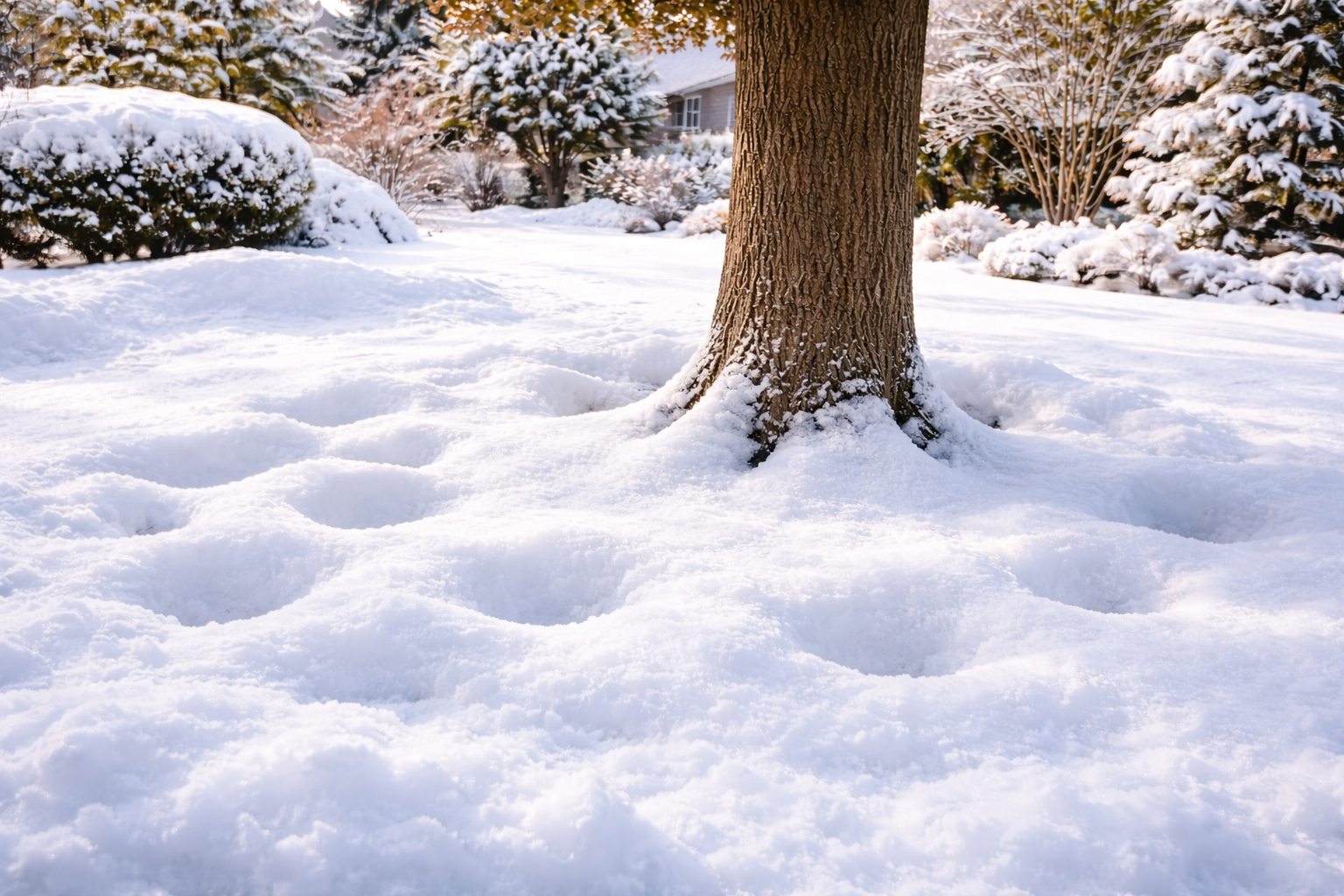

Snow can be a friend and a foe. It insulates roots, waters the soil as it melts, and protects low plants from drying winds. It can also snap branches, smother evergreens, invite rodents to gnaw bark, and push salty meltwater into root zones. Understanding how snow helps and harms gives you a clear plan to protect your landscape all winter and set it up for a strong spring.
The helpful side of snow
Natural insulation
A fluffy layer of snow traps air like a blanket. That air slows heat loss from the soil and keeps root zones closer to a stable temperature. Perennials, young shrubs, and shallow roots benefit the most. Under a consistent snow cover, plants avoid deep freeze cycles that can kill fine roots.
Slow-release moisture
Clean snow is stored water. As it melts, the soil absorbs moisture slowly, which reduces runoff and erosion. This can be more useful to plants than a quick midwinter rain that runs off frozen ground.
Wind protection for low plants
Snow drifts around groundcovers and small shrubs act as windbreaks. Less wind means less winter burn on foliage and less moisture pulled from stems.
Where snow causes trouble
Heavy, wet snow loads
Wet snow is dense and heavy. It bends or breaks branches, especially on multi-stem shrubs and trees with long, horizontal limbs. Fresh snow can add hundreds of kilograms to a mature tree during a single storm. Young trees with narrow crotch angles are at higher risk.
Ice formation after thaw and refreeze
When temperatures swing above and below freezing, snow slumps, melts, and refreezes as ice. Ice locks branches in place. If you try to shake it off, rigid wood can crack. Ice also adds more weight than snow, so failures often follow a freeze after a mild spell.
Salt and de-icer runoff
Snow shoveled from salted sidewalks and driveways carries sodium and chlorides into planting beds. Salt pulls water from roots and disrupts nutrient uptake. Evergreens often show brown tips and leaf scorch on the side facing a salted surface.
Compaction from snow piles
Repeated shoveling and piling create heavy mounds that compress soil. Compacted soil loses pore space for air and water. Roots struggle to breathe in late winter and spring.
Rodent damage under the snow line
Voles and mice tunnel under snow and chew bark where it meets the soil. Damage rings the trunk and can girdle young trees and shrubs. The risk rises when deep snow hides their activity from predators.
Sunscald after reflective snow days
Bright sun reflects off snow and warms thin bark on the south and southwest side of trunks. After sunset temperatures drop fast. The bark contracts and can split. This shows up later as long cracks or sunken, discolored patches called sunscald.
How to help during and after storms
Brush, do not yank
If snow is dry and fluffy, brush it off shrubs and small trees with an upward motion using a soft broom. Lift the snow. Do not pull branches down. If snow is wet or if ice has formed, leave it to melt naturally. Shaking ice can tear wood fibers and create cracks that invite decay.
Tie loosely for support
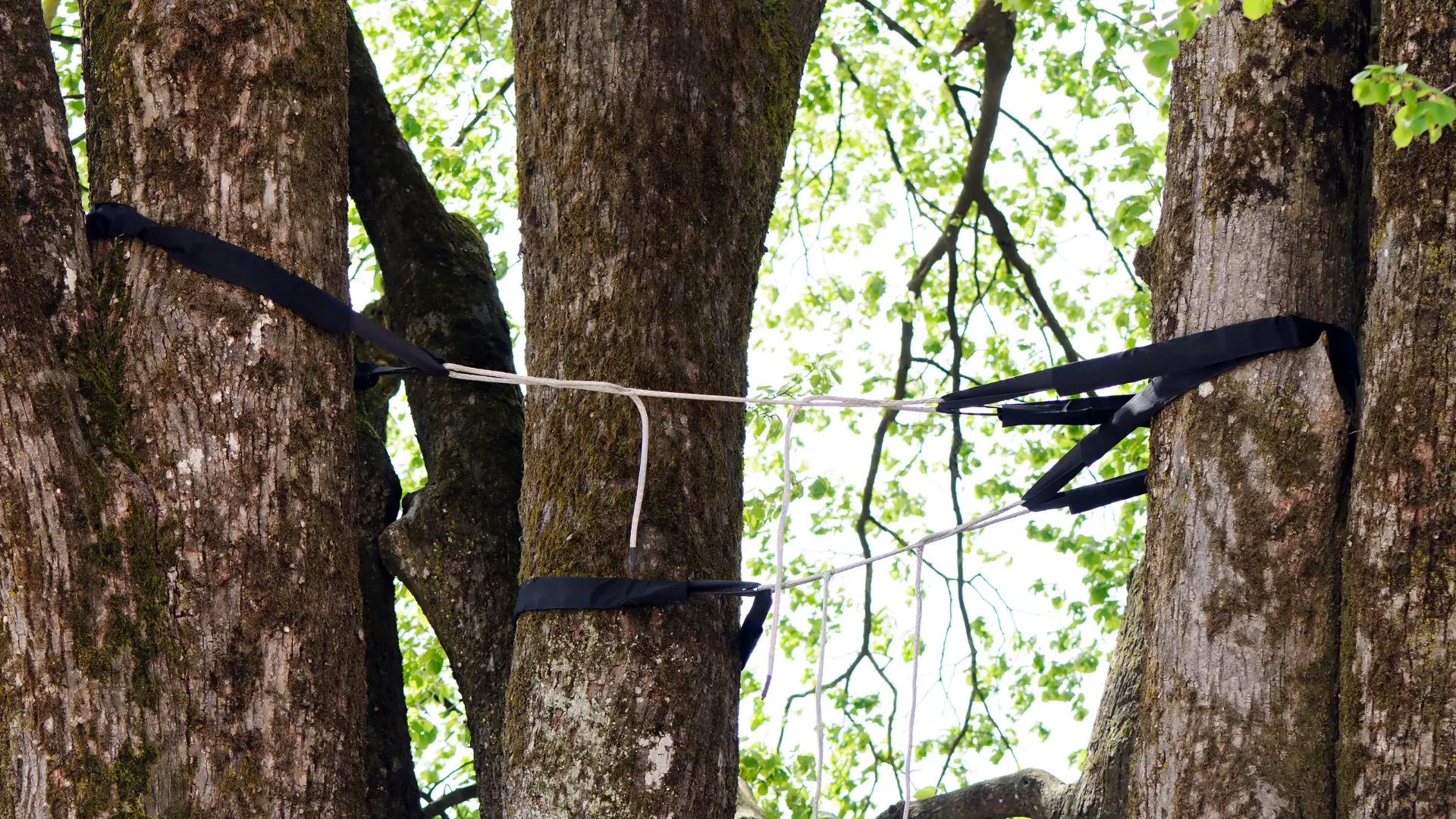
For multi-stem evergreens such as arborvitae, a few soft ties placed before big storms can hold stems together and reduce splaying. Use wide, soft material and remove ties in spring.
Create wind and sun screens
On exposed sites, set burlap screens on the west and south sides of evergreens. For thin-barked young trees, wrap trunks with commercial white tree wrap in early winter and remove it in early spring. Wraps reflect sun and reduce temperature swings.
Reroute snow piles
Shovel or blow snow to areas away from trunks and away from beds with shallow-rooted plants. Spread piles so they melt evenly. Do not bury small evergreens. Avoid stacking salted snow in planting areas.
Use safer de-icers near plants
Choose calcium magnesium acetate or sand near beds and tree lawns instead of sodium chloride. Even with gentler products, use the minimum needed. In spring, leach salt with deep watering to flush it below the root zone.
Guard against rodents
Install ventilated plastic trunk guards or hardware cloth around young trees. The guard should sit a few centimeters below grade and extend above the typical snow line. Keep mulch pulled back from bark to remove cover for gnawing.
What to watch through winter
Branch shape and movement
If a branch stays bent after snowfalls, it may be cracked or the wood may be deformed. Mark it for a late winter inspection. Long horizontal limbs over driveways or roofs deserve extra attention.
Discoloration on evergreens
Bronzing or browning during cold spells can be normal. Browning that worsens on the salted side of the plant suggests salt injury. Plan to adjust de-icer use and leach salts in spring.
Trunk seams and splits
Long straight cracks on the sun side of a trunk are frost cracks. Photograph them and check again in spring. If the crack is wide, if the tree leans, or if you see fungal growth, call a professional for evaluation.
Snowmelt patterns
Persistent puddles near trunks point to poor grading or compacted soil. Note these spots so you can correct drainage and compaction in spring.
Spring recovery after a snowy winter
Assess before you cut
Once snow melts, look for broken stubs, torn bark, or branches that did not rebound. Remove broken and hanging branches first. Make clean cuts just outside the branch collar. Leave healthy wood intact.
Correct structure with light pruning
On shrubs that splayed, thin older stems and shorten long canes to strong laterals. On young trees, set a single leader and remove crossing or rubbing limbs. Keep live pruning conservative on mature trees.
Aerate compacted soil
Where you piled snow, use core aeration for turf areas and consider vertical mulching with compost in planting beds. Restoring pore space brings back oxygen and water infiltration.
Leach salt
Apply deep water several times in April to wash salts below the root zone. Where injury was severe, gypsum can help replace sodium on clay particles. Follow soil test guidance for rates.
Refresh mulch
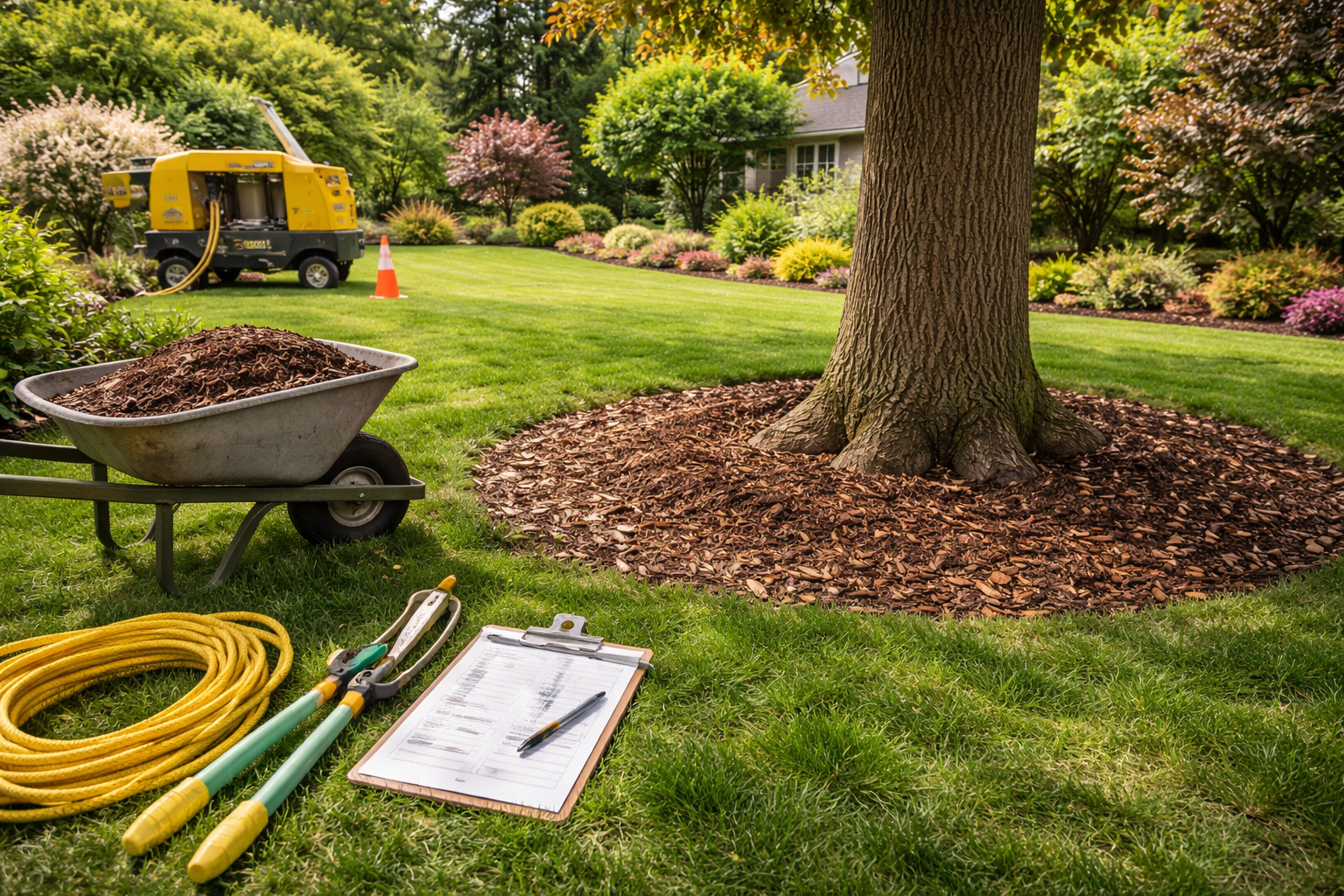
Set a 5 to 8 centimeter layer of coarse wood chips over root zones, pulled back from trunks. Mulch evens soil temperature and reduces evaporation as the growing season starts.
Fertilize with care
Do not rush to feed winter injured plants. Focus on soil health first. If a soil test shows low nutrients, use a slow-release product at label rates once new growth begins.
When to bring in a pro
Call a certified arborist if you find any of the following:
-
A cracked trunk with a wide opening or movement when pushed
-
Large broken limbs near roofs or power lines
-
Lean that increased over winter
-
Mushrooms or conks at the base
-
Extensive browning on conifers that persists into late spring
-
Repeated splaying on multi-stem evergreens that simple tying does not prevent
A professional can prune safely, assess internal wood condition, and recommend cabling or bracing where needed. They can also create a recovery plan for soil health and watering.
The bottom line
Snow is not just a nuisance. It is a complex force in your yard. It can protect roots, deliver moisture, and shield small plants from wind. It can also break limbs, compact the ground, move salt into beds, and invite pests. Simple steps during storms and smart recovery work in spring will prevent long-term damage and keep your trees and plants healthy.
Want a winter checkup or a spring recovery plan for your yard
Loyal Tree’s ISA certified arborists provide winter inspections, safe pruning, soil rehab, and salt injury recovery across Toronto and the GTA. We protect your property and guide your landscape from snow season to spring growth. Call 647 283 8556 or visit loyaltree.ca to schedule your assessment.