
Planting a tree is an investment in shade, curb appeal, and cleaner air. Yet the first summer is often the most dangerous time for a new sapling. Toronto’s July and August heat waves can spike above 30 °C for days on end, baking exposed root balls and pushing young leaves into severe moisture stress. Without fast intervention, heat shock can stunt growth for years or even kill newly installed trees.
Below is a field-tested guide to protecting fresh plantings through the hottest months. Follow these steps and your young trees will establish strong roots, resist pests, and deliver healthy foliage long after the heat subsides.
1. Recognize the Signs of Heat Shock
Newly planted trees lack the deep, spreading roots of mature specimens, so they cannot tap cool, moist soil layers. Symptoms of heat stress show quickly and include:
-
Leaves curling inward or drooping during midday
-
Margins turning brown and crispy, also called leaf scorch
-
Wilting that persists into the evening
-
Trunk sunburn on thin-barked species like maple, birch, and beech
-
Sudden leaf drop despite adequate soil moisture
Catching these early warnings allows you to correct the watering schedule or add shade before permanent damage sets in.
2. Water Deeply and Consistently
The Golden Rule: One Inch Per Week
For most soils, aim to provide the equivalent of 25 mm (one inch) of water each week, split into two deep soakings. Sandy soils need slightly more frequent applications, while heavy clay holds moisture longer but requires slower delivery.
Gator Bags: The Set-and-Forget Method
Tree watering bags zip around the trunk and release 60 to 75 L over six to eight hours, ensuring gradual infiltration. Refill bags every three to four days during heat waves for trees under two years old.
Slow Drip Hose Setup
Lay a soaker hose in a spiral at the edge of the root ball, extending just beyond the planting pit. Run the hose at low pressure for 45 to 60 minutes, then check soil moisture by inserting a screwdriver. If it penetrates easily to 15 cm, watering is sufficient.
Avoid Shallow Sprinkling
Spraying the canopy cools leaves temporarily but encourages surface roots. Always target the root zone, not the trunk.
3. Create Instant Shade
Shade Cloth Tents
For small ornamentals and fruit trees, drive three or four bamboo stakes around the planting hole, then drape a 30 to 50 percent shade cloth over the top, securing it with clips. Leave the north side partially open to allow airflow. Remove the cloth once evening temperatures drop below 25 °C consistently.
Temporary Patio Umbrellas
In tight urban yards, a large patio umbrella anchored in a weighted stand can block the harsh afternoon sun. Position it on the west or southwest side of the tree between noon and 6 pm.
Cardboard or Plywood Shields
If the trunk is scorching, fasten a piece of cardboard or plywood to tomato stakes two to four inches away from the bark. This prevents direct sun without trapping heat against the tree.
4. Apply Mulch for Moisture and Temperature Control
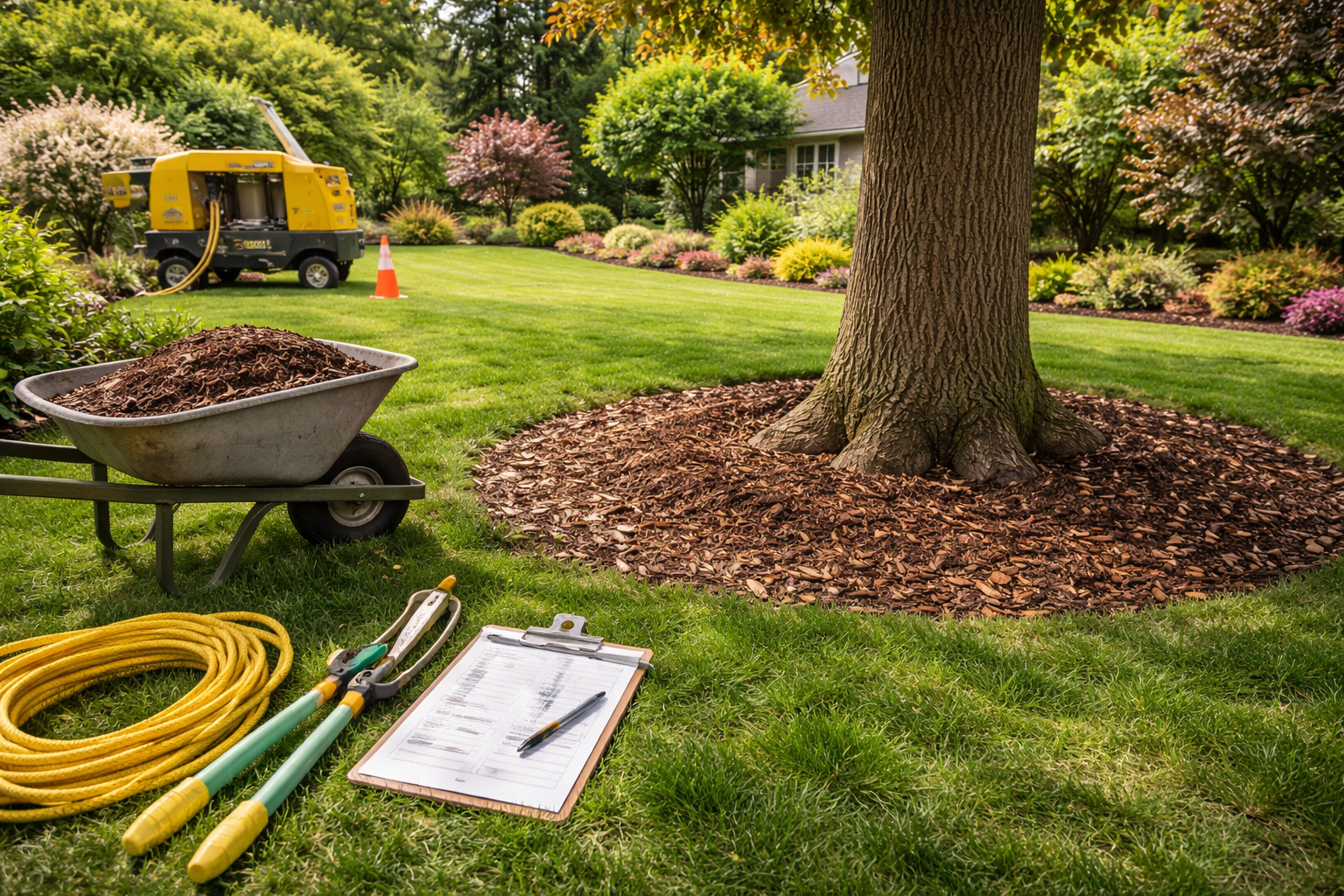
A 7 to 8 cm layer of coarse wood chips conserves soil moisture, buffers temperature swings, and suppresses weeds that compete for water. Follow these rules:
-
Extend mulch at least 45 cm beyond the planting hole.
-
Keep mulch 8 cm from the trunk flare to prevent rot and rodent damage.
-
Rake or fluff mulch every few weeks to maintain porosity.
Municipal yard-waste depots often provide free mulch. Choose chips rather than shredded bark; chips decompose slowly and stay cooler.
5. Use Anti-Transpirant Sprays Wisely
Anti-transpirants form a thin film on leaves that slows water loss. Products containing pinolene or acrylic polymers can give young trees temporary relief during extreme heat spells. Apply in early morning on well-hydrated leaves, following label rates. Do not spray drought-stricken foliage, as blocking gas exchange on already stressed leaves can worsen decline.
When Anti-Transpirants Help Most
-
Newly planted evergreens that cannot shed leaves to reduce moisture loss
-
Thin-leaf species like Japanese maple during record-breaking heat events
-
High-value ornamentals under city watering restrictions
Reapply after heavy rain or every three weeks, whichever comes first. Discontinue once daytime highs consistently stay below 27 °C.
6. Check Soil Oxygen with Vertical Mulching
Compacted soil around new builds often lacks pore space for oxygen and root expansion. Vertical mulching fixes both issues by drilling narrow holes 30 cm deep and backfilling with compost. For DIYers, a post-hole auger set 60 cm apart around the dripline works in loamy soil. In clay, hire an arborist with an air spade to avoid root damage.
Benefits include:
-
Improved drainage
-
Faster root colonization
-
Increased microbial activity for nutrient uptake
Completing this task in mid-summer sets the stage for explosive fall root growth when temperatures moderate.
7. Fertilize Lightly, If at All
High-nitrogen fertilizers can push late-season soft growth that fails to harden before early frosts. If a soil test shows nutrient deficiency, choose a balanced, slow-release product such as 12-4-8 and apply at half the spring rate. Scratch granules into the mulch layer, then water deeply. Skip midsummer fertilizing if soil nutrients are adequate.
8. Monitor and Adjust
Track weekly rainfall with a gauge and maintain a simple watering log. Include dates, litres applied, and weather conditions. Use a soil moisture meter or screwdriver test before each irrigation session. Adjust shade cloth position as the sun angle changes through July and August.
9. Avoid Common Mistakes
-
Overwatering Clay Soil
Saturated clay excludes oxygen, suffocating roots. Always test moisture before watering again. -
Mulch Volcanoes
Piling mulch against the trunk invites decay and girdling roots. Keep that donut-shaped gap. -
Fertilizing Heat-Stressed Trees
Extra nitrogen without adequate water compounds stress. -
Ignoring City Bylaws
Toronto watering advisories may limit times or methods. Drip irrigation and soaker hoses are usually exempt from restrictions.
Final Thoughts: Establish Roots Now for Long-Term Shade
Heat shock can set back a young tree for multiple seasons, but with thoughtful watering, temporary shade, and good soil management, your sapling will shrug off Toronto’s hottest weeks and head into autumn with strong, hydrated roots.
Need Professional Help?
Loyal Tree Inc. offers tailored summer survival packages for newly planted trees across the GTA. Our ISA-certified arborists install watering systems, design shade solutions, and provide soil aeration that accelerates root establishment. Call 647 283 8556 or visit our contact page to schedule a mid-season health check. Give your young trees the best chance to flourish now and for decades to come.