
Toronto winters can arrive quickly and stay for months. Cold snaps, lake effect snow, ice storms, and freeze–thaw cycles test every part of your property, especially trees and shrubs. With a clear plan, you can reduce damage, protect your landscape, and avoid costly emergency calls. Here is a practical guide to prepare your yard, trees, and outdoor systems for a Toronto winter.
1) Start with a Fall Inspection
Walk your property and take notes before the first hard frost.
-
Canopy check. Look for dead or broken branches, tight V-shaped crotches, crossing limbs, and branches that overhang roofs, walkways, or driveways. Mark anything that could break under snow load or ice.
-
Trunk and base. Check for cracks, loose bark, fungal conks, or soft wood at the root collar. A visible trunk flare is good. If the base sits below soil or mulch, plan a light root collar excavation.
-
Roots and soil. Note areas with poor drainage, compacted soil, or surface roots that get hit by shovels. Flag tree pits that collect water during thaws.
If you see multiple issues on the same tree, schedule a professional assessment.
2) Prune for Safety and Structure
Late fall is a smart time to reduce risk before heavy snow and wind.
-
Remove dead, diseased, and broken wood first. Deadwood is brittle and fails easily.
-
Shorten overextended limbs that reach over roofs, parking spaces, and play areas. Cut back to a strong lateral branch.
-
Thin congested interior growth on mature trees to improve airflow and reduce wind sail. Limit live crown removal to 15 to 20 percent in one season.
Make clean cuts just outside the branch collar and avoid flush cutting. For large limbs, use the three cut method to prevent bark tearing. If work involves climbing, rigging, or proximity to power lines, bring in a certified arborist.
3) Protect Young and Thin Barked Trees
Winter sun and wind can injure bark and cambium.
-
Tree wraps. Wrap young maples, birches, fruit trees, and other thin barked species from December through March. Start at the base and overlap upward to the first branches. Remove wraps in early spring to prevent moisture build up.
-
Trunk guards. Use ventilated plastic guards where rabbits or rodents are a concern. Install them to a height above typical snow depth.
4) Mulch to Buffer Temperature and Moisture
A proper mulch layer protects roots from deep freezes and evaporation.
-
Apply 5 to 8 centimetres of coarse wood chips across as much of the root zone as possible.
-
Keep mulch 8 centimetres back from the trunk. Aim for a donut shape, not a volcano.
-
Rake existing mulch to break crusting, then top up to the desired depth.
Wood chips improve soil structure and support beneficial microbes that help trees rebound in spring.
5) Water Before the Ground Freezes
Trees enter winter stronger when root zones are hydrated.
-
Target the dripline and water slowly so moisture reaches 15 to 20 centimetres deep.
-
Focus on evergreens and trees planted within the last three years.
-
Aim for 25 millimetres of total moisture from irrigation and rainfall per week until consistent night freezes arrive.
Well hydrated roots are less likely to suffer winter burn and dieback.
6) Manage Snow and Ice Loads
Toronto’s freeze–thaw pattern can coat branches with ice and pack wet snow into dense loads.
-
Do not shake ice covered branches. Let ice melt naturally. Shaking can cause cracks at unions.
-
Brush off dry, fluffy snow from smaller ornamentals with a broom. Lift upward to avoid pulling branches down.
-
Plan safe shedding zones. Trim or redirect long limbs that would drop snow or ice onto walkways and driveways.
If a heavy limb splits or hangs, rope off the area and call a professional.
7) Salt and Deicing Protection
Road and sidewalk salt can burn foliage and damage roots.
-
Create barriers. Burlap screens or low fences can block salt spray from traffic.
-
Choose gentler products. Calcium magnesium acetate is less harsh than sodium chloride for private walkways.
-
Leach salt in spring. In April, water heavily to flush accumulated salts from the root zone.
Consider salt tolerant plantings near driveways and sidewalks where salt use is unavoidable.
8) Cable and Brace Where Needed
Some structural defects require more than pruning.
-
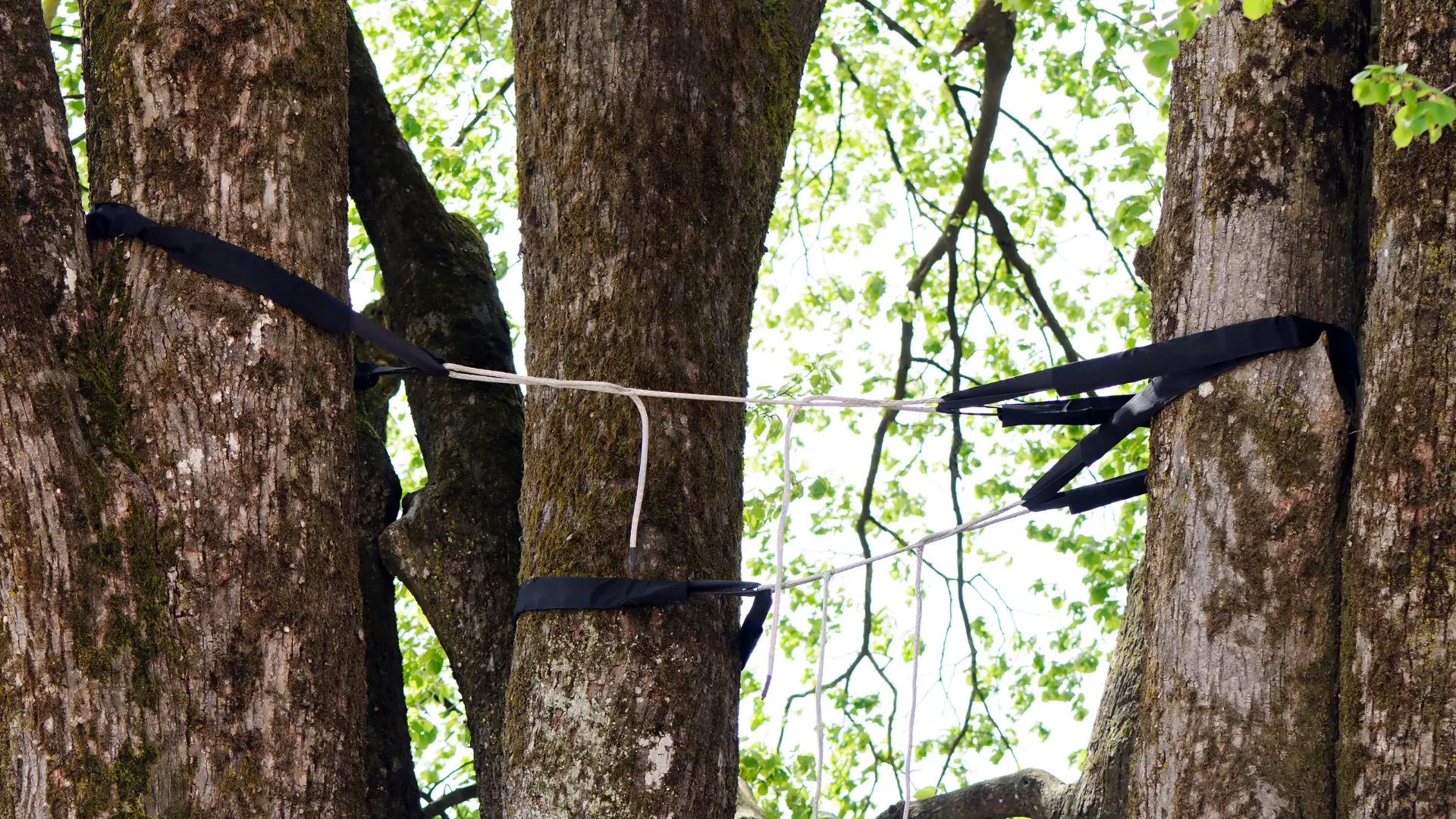
Cabling supports weak unions between co dominant stems.
-
Bracing rods reinforce cracked crotches or long lateral limbs.
-
Regular inspections ensure hardware remains sound. These systems should be designed and installed by a qualified arborist according to industry standards.
9) Protect Planting Beds and Lawns
Wind and cold dehydrate shallow roots in garden beds and turf.
-
Perennials and shrubs. Add mulch, cut back as recommended by species, and secure burlap around wind sensitive evergreens.
-
Lawns. Keep leaves raked. Thick mats of leaves trap moisture and promote snow mold. Raise mower height for the final cut to help insulate crowns.
10) Prepare for Storms
A simple plan helps you act quickly when winter warnings appear.
-
Store tarps, ropes, flashlights, and a charged phone in an easy location.
-
Know where electrical and irrigation shutoffs are located.
-
Save contact info for utility providers and your arborist.
-
After a storm, do a careful safety scan. Keep people and pets away from downed lines, cracked trunks, or branches that are bent but not broken.
Do not attempt to cut tensioned or partially failed limbs. These can move suddenly and cause serious injury.
11) Watch for Winter Tree Health Issues
Some problems show up during the cold months.
-
Evergreen browning on the south and west sides can indicate winter burn. Check soil moisture and consider anti desiccant sprays in future seasons.
-
Frost cracks present as long vertical splits on trunks. They may close in spring but are a sign to monitor.
-
Animal damage appears as gnawing at the base. Install guards and repair small wounds with clean cuts to remove ragged edges.
Document issues with photos so you can track change through spring.
12) Plan for Spring Recovery
A bit of planning now will make your spring smoother.
-
Book a late winter or early spring pruning appointment for final deadwood removal.
-
Schedule a soil assessment if the site is compacted or poorly drained.
-
Set reminders for mulch checks and the first deep watering when the ground thaws.
Healthy recovery depends on good follow through once temperatures rise.
When to Call a Professional
Bring in a certified arborist if you see any of the following:
-
Large dead limbs over high traffic areas
-
Fungal conks, soft wood at the base, or a significant lean
-
Cracked unions between heavy stems
-
Trees growing into or near overhead lines
-
Multiple stress signals on the same tree
A professional assessment provides a clear plan that fits Toronto bylaws and keeps your property safe.
The payoff
Winter is hard on trees, but preparation works. Prudent pruning, proper mulch, a final deep watering, and protection from ice and salt reduce failures and keep your canopy strong. You also protect your home, your neighbours, and your budget by avoiding preventable emergencies.
Want a tailored winter readiness plan for your property?
Loyal Tree’s ISA certified arborists provide end of season inspections, risk pruning, cabling, mulch and soil improvements, and storm response throughout Toronto and the GTA. Call 647 283 8556 or visit loyaltree.ca to schedule your winter prep visit and head into the cold season with confidence.