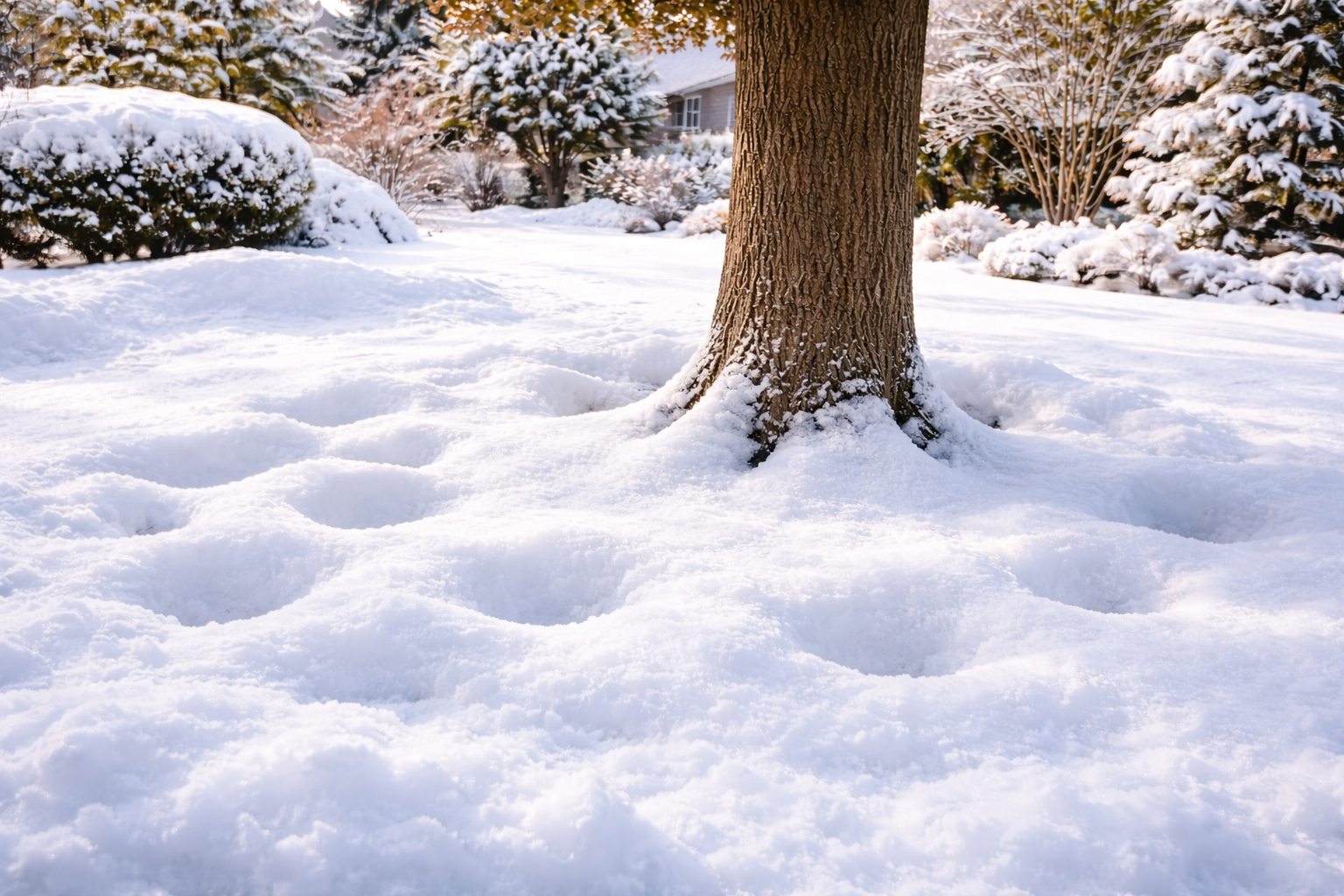

Trees are an essential part of Toronto’s urban landscape—providing shade, improving air quality, enhancing curb appeal, and increasing property values. But while the canopy above ground offers countless benefits, the hidden world below ground—tree roots—can sometimes create headaches for homeowners. Left unchecked, invasive or overgrown roots can damage sidewalks, driveways, foundations, sewer and water lines, and other underground infrastructure. The good news? With proactive planning, proper species selection, and regular maintenance, you can enjoy the benefits of mature trees without sacrificing your property’s structural integrity.

Why Tree Roots and Infrastructure Clash
Tree roots naturally seek out moisture and oxygen. In urban settings, that often means roots grow toward foundations, pipes, and paved surfaces, exploiting tiny cracks and gaps. Over time, these roots can:
-
Lift sidewalks and driveways, creating trip hazards and costly repairs.
-
Crack foundations and basement walls, leading to water infiltration and structural weakening.
-
Intrude on sewer and water lines, causing blockages, leaks, and expensive excavation.
-
Disrupt underground utilities, such as gas or electrical conduits, resulting in service interruptions.
Toronto’s mix of clay and loam soils can exacerbate these issues. Clay soils expand when wet and contract when dry—exerting pressure on roots and infrastructure alike.
1. Choose the Right Tree Species
Prevention starts at planting. Some tree species have aggressive, wide-spreading root systems, while others develop more compact, deep-growing roots. When planting new trees near sidewalks, driveways, or foundations, opt for species with less invasive roots.
Recommended Low-Risk Species for Toronto Yards
-
Serviceberry (Amelanchier spp.): A small ornamental tree with a shallow but non-invasive root system.
-
Japanese Maple (Acer palmatum): Offers stunning foliage and stays relatively compact underground.
-
Honeycrisp Crabapple (Malus ‘Honeycrisp’): A fruiting ornamental with moderate root habits.
-
Sassafras (Sassafras albidum): Deep taproot system minimizes surface root spread.
Conversely, species such as silver maple, poplar, willow, and certain elms are best avoided near structures—these trees can develop roots that extend far beyond their canopy and exploit any weakness in pavement or pipes.
2. Proper Planting Location and Techniques
Even low-risk species can cause problems if planted too close to vulnerable infrastructure. Follow these guidelines:
-
Maintain Safe Distances: As a rule of thumb, plant trees at least half the mature canopy width away from buildings, sidewalks, and driveways. For instance, a tree that will reach 40 feet in width should be planted at least 20 feet from structures.
-
Root Barriers: Install physical root barriers—vertical panels of plastic or metal—that direct roots deeper into the soil, away from foundations and pavement. Barriers should extend at least 2–3 feet deep.
-
Structured Soil Beds: In urban landscapes, consider engineered soil cells beneath paved areas. These systems provide adequate soil volume for root growth while protecting infrastructure.
3. Regular Root Maintenance and Monitoring
If you have existing trees near structures, periodic inspection and maintenance can prevent small issues from becoming major repairs.
Inspection Tips
-
Visual Checks: Look for lifted or cracked pavement, bulging foundation walls, or damp spots in the basement—these can indicate root intrusion.
-
Professional Root Crown Excavation: Have an arborist carefully excavate around the root crown to assess root health and identify problematic roots.
-
Camera Inspections for Pipes: If you suspect root intrusion in sewer or water lines, use a video camera inspection before digging—this pinpoint the location and extent of root invasion.
Maintenance Actions
-
Targeted Root Pruning: A certified arborist can selectively prune encroaching roots. This must be done carefully—excessive root removal can destabilize the tree.
-
Soil Aeration: Compacted soil drives roots toward looser areas under pavement. Aerating the soil around trees encourages deeper root growth and reduces surface rooting.
-
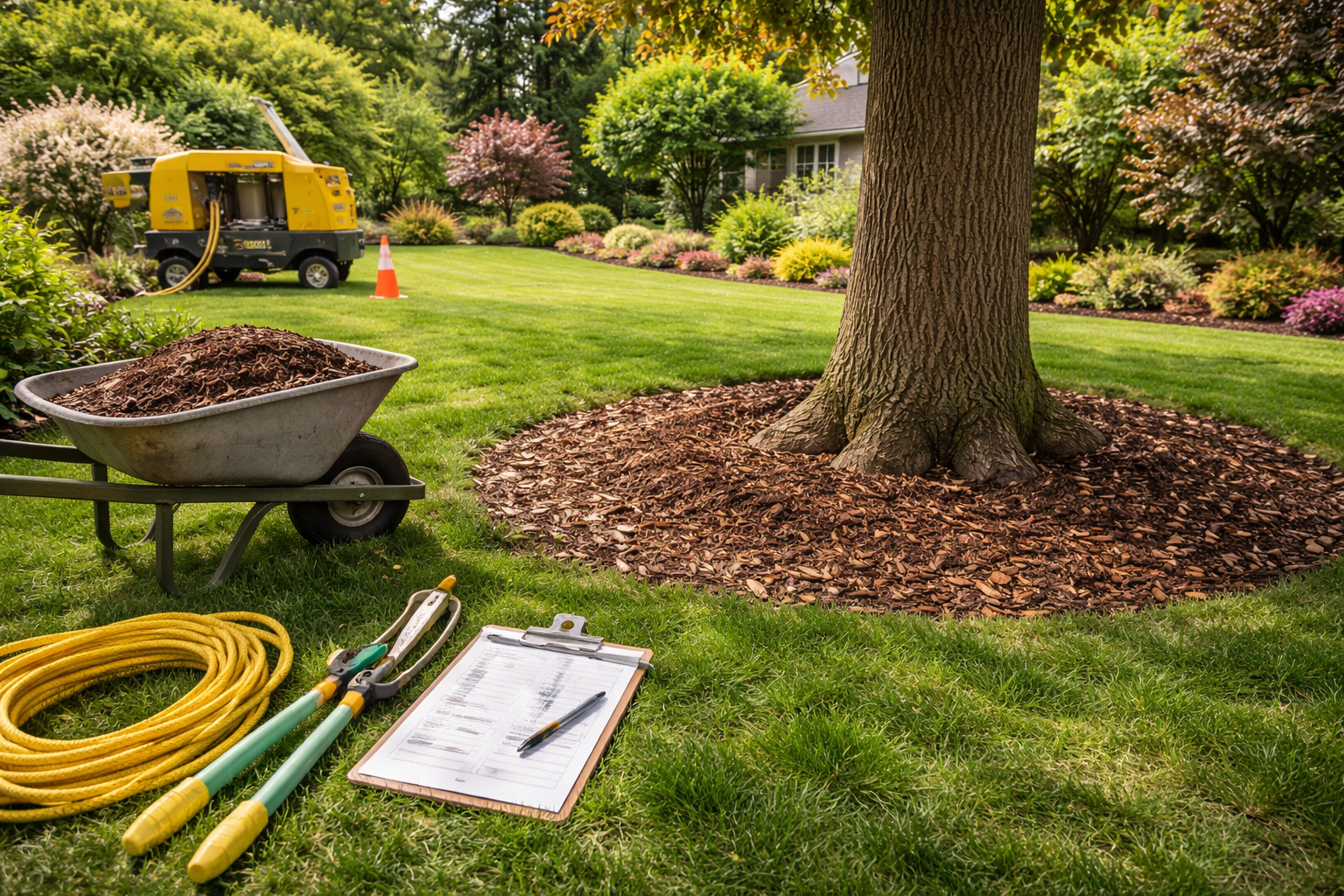
Mulching: Apply a 2–4 inch layer of organic mulch around the tree’s drip line. Mulch conserves moisture, moderates soil temperature, and discourages roots from spreading in search of water.
4. When to Call in the Experts
Some situations call for professional intervention:
-
Significant Structural Damage: Cracked foundations or severely lifted pavement require both arborist and structural contractor collaboration.
-
Major Root Intrusion in Utilities: If roots have invaded sewer or water lines, a licensed plumber and arborist should coordinate to remove roots and repair pipes.
-
Hazardous Trees: Trees showing signs of decline—large cracks, extensive root decay, or severe lean—need a certified arborist’s assessment for safety and stability.
Loyal Tree’s certified arborists use advanced techniques—such as pneumatic air excavation to expose roots without damage, hydro-jet root removal in pipes, and strategic barrier installation—to protect both trees and infrastructure.
5. Long-Term Strategies for Tree-Friendly Infrastructure
Integrating trees into urban environments requires collaboration between homeowners, arborists, and city planners. Consider these proactive steps:
-
Community Tree Planting Plans: Work with local councils to select appropriate species for planting strips and parks, reducing future infrastructure conflicts.
-
Permeable Paving Solutions: Replace traditional concrete with permeable pavers that allow roots to access oxygen and water without lifting surfaces.
-
Integrated Landscape Design: During renovations, involve arborists early to design planting schemes that balance aesthetic goals with infrastructure protection.
Trees are vital to Toronto’s character and environmental health, but their roots need careful management to prevent damage to sidewalks, foundations, and underground utilities. By choosing the right species, planting strategically, performing regular inspections, and involving certified arborists when necessary, homeowners can enjoy the many benefits of mature trees without costly infrastructure repairs.
At Loyal Tree, we specialize in holistic tree care that safeguards both your landscape and your property. From root barrier installation to targeted root pruning and emergency root intrusion repairs, our expert team is here to help.
Protect your investment—call Loyal Tree today at 647-283-8556 to schedule a root and infrastructure assessment and keep your trees and property in harmony.